
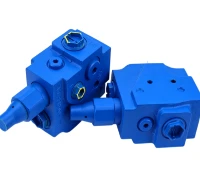
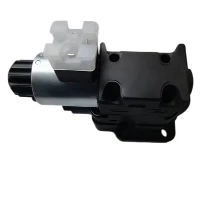
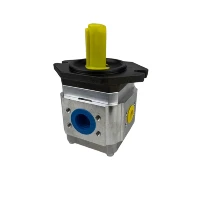
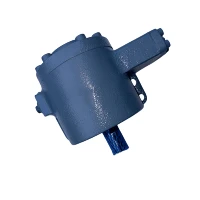
Product Introduction
A hydraulic motor is a critical mechanical actuator in hydraulic transmission systems, which functions to convert hydraulic pressure energy and fluid flow into rotational mechanical energy, outputting stable torque and rotational speed to drive mechanical components. Serving as the reverse operating device of a hydraulic pump, it relies on pressurized hydraulic fluid to drive internal precision structures including gears, vanes or pistons, enabling continuous and reversible rotary motion.
Classified by structural types, hydraulic motors mainly include gear motors, vane motors and piston motors, each with differentiated performance characteristics to adapt to diverse operating conditions. Featuring high power density, compact structure, stable low-speed performance and excellent overload resistance, these motors can deliver strong torque output even under heavy-load and harsh working environments where conventional electric motors cannot operate stably. In addition, they support flexible speed regulation, smooth power transmission and reliable shock load resistance, with outstanding durability and adaptability to high-pressure, dusty and humid industrial scenarios. With simple installation and convenient maintenance, hydraulic motors can be flexibly integrated into various mechanical hydraulic systems to meet continuous and intermittent power output demands.
Application Scenarios
Hydraulic motors are widely adopted in mobile machinery, industrial equipment and special engineering fields that require high torque, stable power output and compact installation space, covering multiple core industries:
1. Construction Engineering Machinery
This is one of the most mainstream application fields. Hydraulic motors provide power for the slewing mechanism of excavators, walking systems of bulldozers and loaders, lifting winches of cranes, and rolling drums of road compactors. Their superior low-speed high-torque performance ensures stable operation and powerful load-bearing capacity during heavy-duty construction operations, effectively improving the efficiency and safety of engineering construction.
2. Agricultural Machinery Equipment
Adapted to complex and changeable farmland working environments, hydraulic motors are applied to drive the working components of combine harvesters, forage harvesters, fertilizer spreaders and intelligent irrigation equipment. They can maintain stable power output under uneven load conditions, meet the continuous operation requirements of agricultural machinery, and effectively improve the automation level and operating efficiency of agricultural production.
3. Industrial Manufacturing and Conveying Equipment
In industrial production scenarios, hydraulic motors serve as the power core of automated production lines, material conveyors, mixing and stirring equipment, and plastic processing machinery. Their precise speed regulation and stable torque output ensure the consistency and accuracy of industrial production processes, while the compact structural design saves equipment installation space and reduces overall equipment operating costs.
4. Marine and Offshore Engineering
With excellent corrosion resistance and stable high-load operation performance, hydraulic motors are widely used in marine winches, deck cranes, ship propulsion auxiliary systems and offshore engineering equipment. They can adapt to humid, high-salinity marine environments and long-term uninter


