![[[smallImgAlt]]](/uploads/37657/spv-series-hydraulic-gear-pump-for-tcmb5110.png)


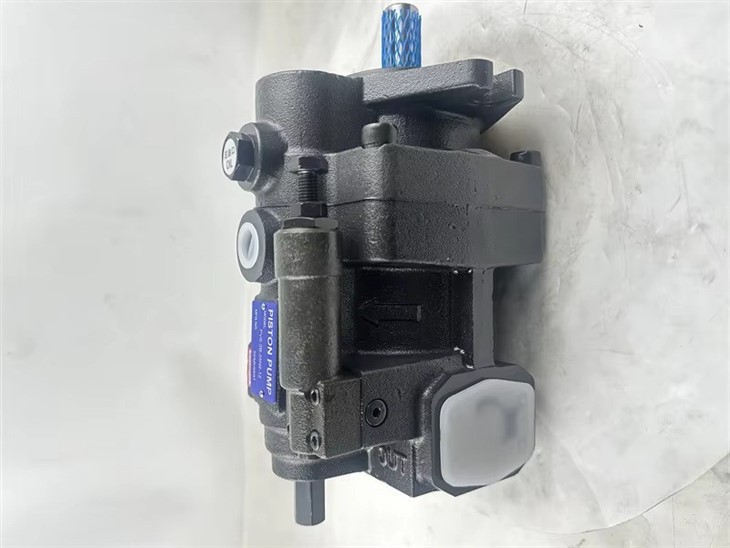


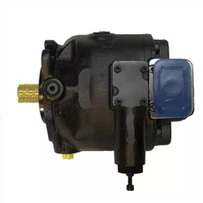
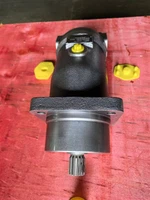
Description of PVS Series Gear Pump
| Energy Saving: Reduces power loss by eliminating excess discharge. |  |
| Low Noise: Incorporates design elements for quieter operation. | |
| Stable Performance: Semi-cylindrical swash plate ensures stable volume. | |
|
Features low pulsation, a wide operating range suitable for various fluid viscosities |
PVS Series Gear Pump Parameter Table:


The Advantage of the PVS Series Pump :
Energy Efficiency: Uses a semi-circular swash plate for stable discharge, reducing excess flow and power loss, saving energy and costs.
Low Noise & Vibration: Incorporates proprietary designs in shoe, swash plate, and valve plate, plus a unique three-point support system, for quiet, stable operation.
High Efficiency: Improved mechanisms and precision machining reduce power loss.
Versatile Control: Available with pressure compensation, solenoid cutoff, and 2-pressure/2-flow control for optimized system performance.
Reliable: Stable characteristics and high-pressure performance for demanding applications.
PVS Series Vane Pump Product series model:
Key Model Examples & Characteristics:
PVS-0B Series: Compact, energy-saving models, e.g., PVS-0B-8N*-30 (8 cm³/rev).
PVS-1B Series: Common sizes like 16.5 cm³/rev (PVS-1B-16) and 22 cm³/rev (PVS-1B-22).
PVS-2B Series: Larger capacities, such as 35 cm³/rev (PVS-2B-35) and 45 cm³/rev (PVS-2B-45).
Larger Sizes: PVS-4B (100 cm³/rev), PVS-5B (130 cm³/rev), PVS-6B (220 cm³/rev).
Model Number Breakdown (Example: PVS-1B-16N-12):*
PVS: Series Name (Variable Volume Piston Pump).
1: Size/Frame Size (e.g., 1 for PVS-1B).
B: Control Type/Configuration (e.g., B for Pressure Compensation).
16: Nominal Displacement (e.g., 16.5 cm³/rev).
N: Control Method (e.g., N for Pressure Compensation).
*: Sub-type/Feature (e.g., N0, N1, N2 for pressure setting).
12: Port Size/Connection (e.g., 12 for SAE 1-1/4" ports).