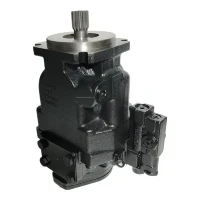




Plunger pump structure: Plunger pumps are divided into two representative structural forms: axial piston pumps and radial piston pumps; Due to its high technological content and high efficiency, radial piston pumps will inevitably become an important component of the application field of piston pumps as they continue to accelerate. The plunger pump mainly consists of two parts: the power end and the hydraulic end, and is equipped with a pulley, check valve, safety valve, pressure regulator, lubrication system, etc. Classification of plunger pumps: Plunger pumps achieve oil suction and discharge by changing the sealing working volume when the plunger moves back and forth in the plunger hole. According to the arrangement direction of the plunger, it is divided into two categories: axial plunger pump and radial plunger pump. Axial type: An axial piston pump is a piston pump whose reciprocating motion direction is parallel to the central axis of the cylinder body. The axial piston pump works by utilizing the volume change generated by the reciprocating motion of the plunger parallel to the transmission shaft in the plunger hole. Due to the fact that the plunger and plunger hole are both circular parts, high precision fit can be achieved